
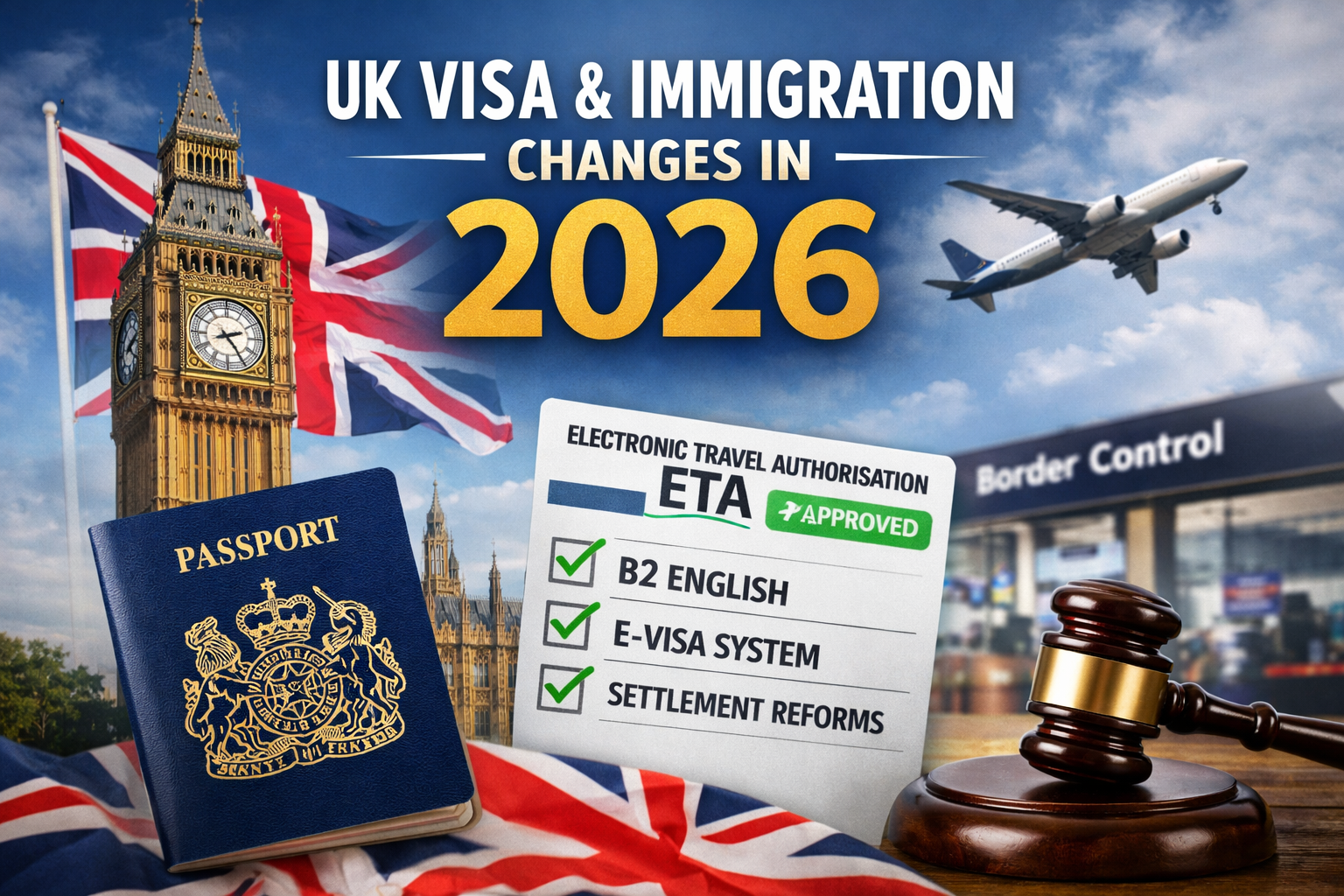
New UK Visa & Immigration Rules in 2026 – What You Need to Know
The United Kingdom has introduced and proposed several significant visa and immigration rule changes for 2026. These updates are part of the government’s wider strategy to control migration, raise skill levels, and modernise the immigration system. Whether you are planning to work, study, visit, or settle in the UK, understanding these changes is crucial.
In this blog, we break down the key UK visa and immigration updates for 2026 in simple terms.
1. Higher English Language Requirements
One of the most important changes coming into effect in January 2026 is the increase in English language requirements for certain work visas.
- The required English level will rise to B2 (Upper‑Intermediate)
- This applies to visas such as:
- Skilled Worker Visa
- Scale‑up Visa
- High Potential Individual (HPI) Visa
- Existing visa holders extending on the same route are generally not required to meet the new level
This change aims to ensure better workplace communication and integration into UK society.
2. Proposed Changes to Settlement (ILR)
The UK government is consulting on a major reform of Indefinite Leave to Remain (ILR), often referred to as an “earned settlement” model.
Possible changes include:
- Settlement period increasing from 5 years to up to 10 years for most routes
- Stronger focus on:
- English language skills
- Continuous employment and income
- Contribution to UK society
These changes are still under consultation and not yet fully implemented, but they may affect future settlement planning.
3. Skilled Worker Visa – Tighter Eligibility
The Skilled Worker route continues to become more selective in 2026:
- Higher salary thresholds and sponsorship costs
- Removal of several lower‑skill occupations from eligibility
- Overseas recruitment for social care worker roles has ended
Employers and applicants must now meet stricter skill and salary standards.
4. Introduction of UK Electronic Travel Authorisation (ETA)
From February 2026, visitors from visa‑free countries will need to apply for an Electronic Travel Authorisation (ETA) before travelling to the UK.
Key points:
- Mandatory for short‑term visitors
- Applies to EU and other visa‑exempt nationals
- ETA will be checked before boarding flights
This system is similar to travel authorisation programs used by the USA and other countries.
5. Fully Digital UK Visas (E‑Visas)
The UK has completed the transition to a fully digital visa system:
- Physical visa stickers and BRP cards are being phased out
- Visa status is now accessed online through a UKVI account
- Applies to work, study, family, and settlement visas
Travellers must ensure their passport details are correctly linked to their e‑visa.
6. Tougher Border & Asylum Measures
Alongside visa changes, the UK has introduced stricter border and asylum enforcement policies in 2026, including:
- Expanded powers for border authorities
- Longer review periods for asylum cases
- Stricter rules around settlement eligibility for refugees
These measures are part of broader migration control reforms.
What These Changes Mean for Applicants
- Early planning is essential for work and settlement routes
- English language preparation is more important than ever
- Employers face higher compliance and sponsorship responsibilities
- Visitors must apply for ETA even if they don’t need a visa
Final Thoughts
The UK immigration system in 2026 is becoming more skills‑focused, digital, and selective. While opportunities remain, applicants must meet higher standards and stay updated with the latest rules.
If you are planning to apply for a UK visa or settlement, professional guidance can help you navigate these changes smoothly.
For personalised visa advice and the latest UK immigration updates, feel free to contact Image Tours & Travels.